Street Photography, Free Photos, and the Problem of Entitlement
A Photographer's Guide to Expectations in Street Photography
Or, as some people seem to think: gimme, gimme, gimme.
Here's a reality check: I don't work for you.
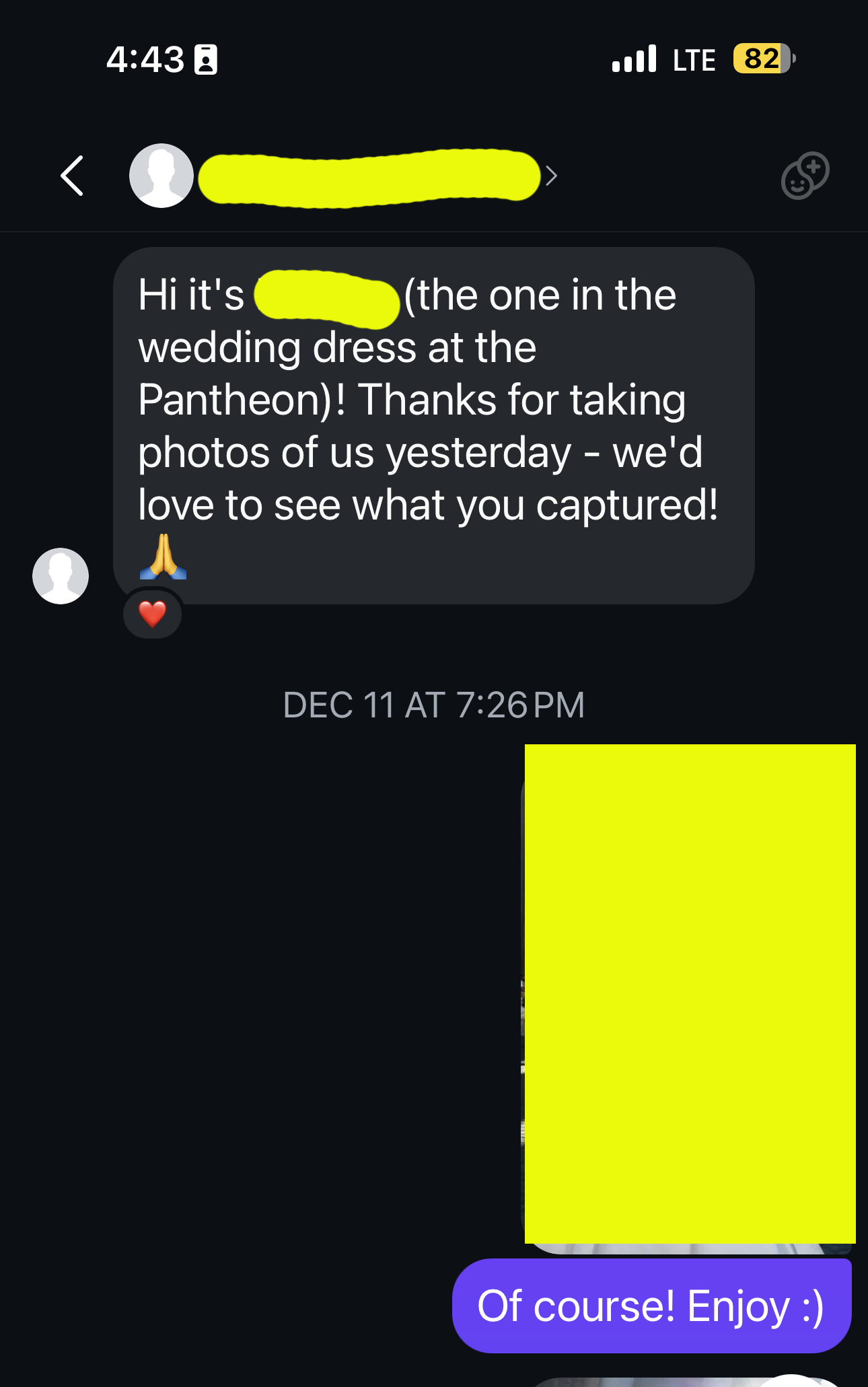
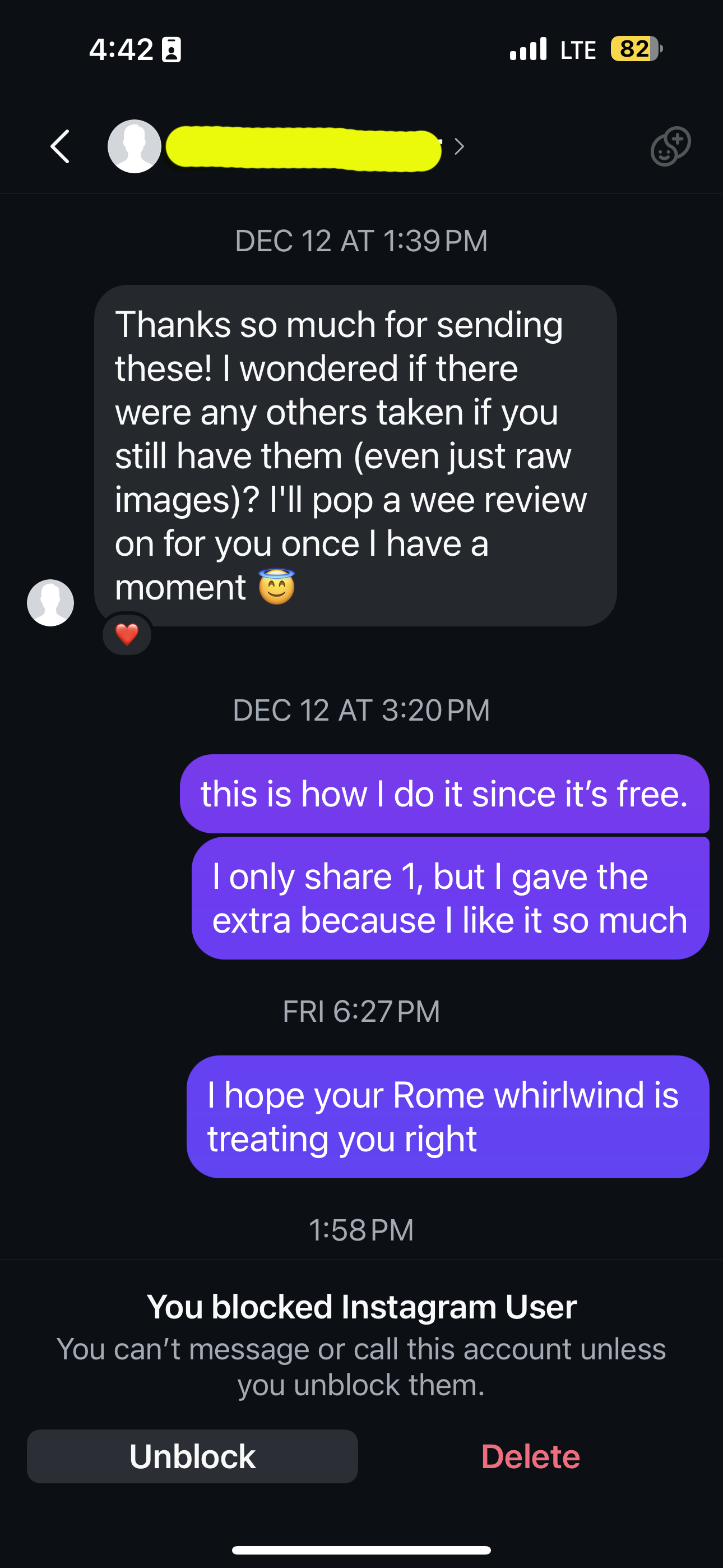
As a street photographer, I have a simple personal policy. Whenever I photograph someone in public and decide to share their image on my feed, I'm happy to send them the one photograph I choose to publish. Consider it a gift—a surprise memory from the day, professionally captured and delivered at no cost.
I don't charge for it. I don't ask for anything in return. In fact, if someone offers to pay me, I decline.
Why? Because it's a gesture of goodwill.
Street photography takes place in public spaces, where courts have long recognized that individuals generally have no reasonable expectation of privacy in what they knowingly expose to public view.
Even so, I enjoy sharing a finished image with the people who happen to become part of a photograph I love.
What continually surprises me, however, is how often this simple arrangement gets misunderstood.
I am very clear: you get one image.
One image does not mean two images.
One image does not mean every frame I shot.
One image certainly does not mean a complete gallery.
Yet somehow, every so often, someone walks away believing they are entitled to more.
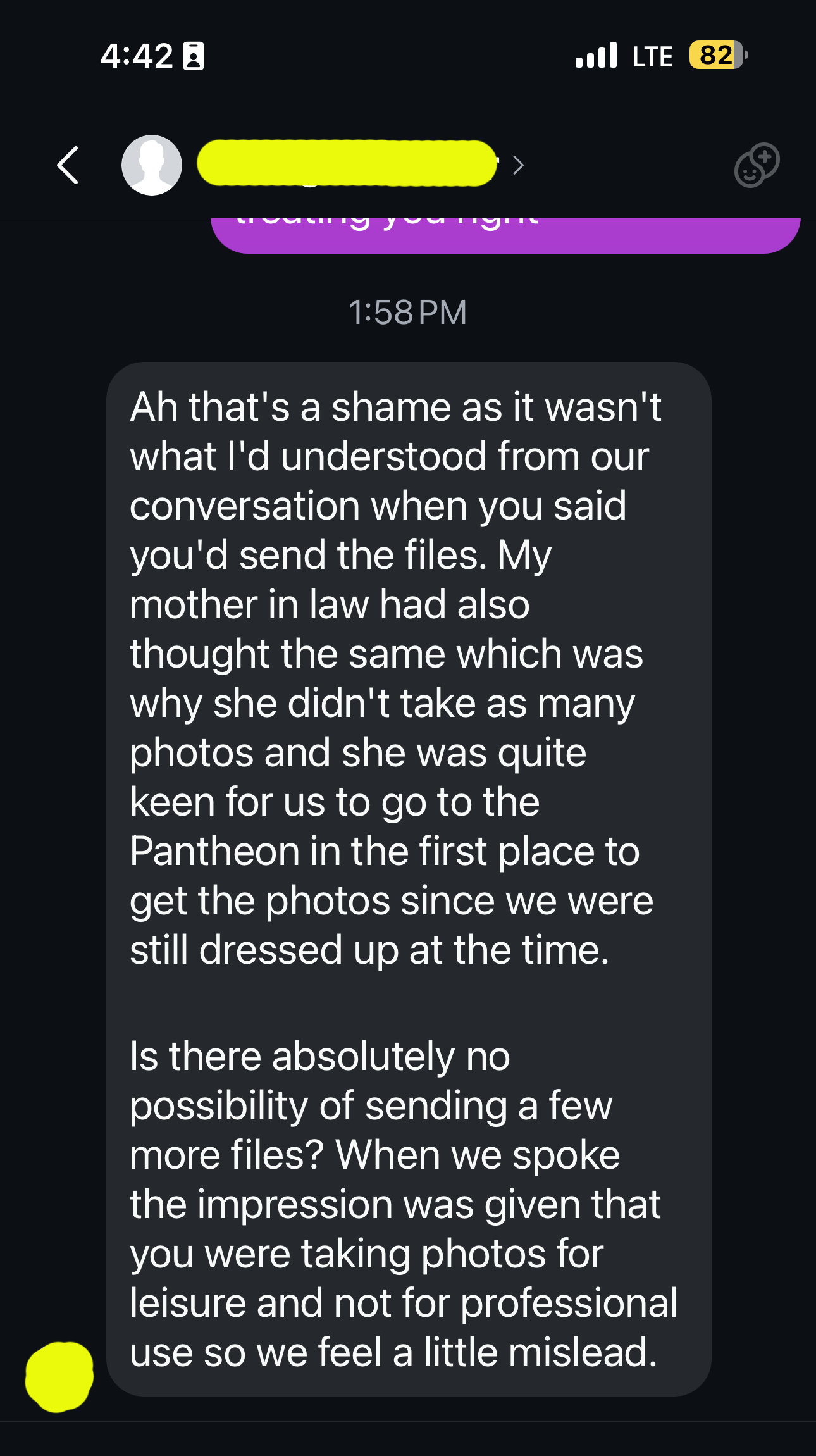
Recently, a tourist told me she felt "misled" because she received only the single photograph I had promised. This was despite the fact that I had clearly explained she would receive one file.
Let's think about that for a moment.
She was already being photographed by a family member on an iPhone. Then a professional photographer happened to capture a strong moment, offered a finished image free of charge, and delivered exactly what was promised—for zero dollars.
How does that become a disappointing outcome?
Why Professional Photographers Don't Give Away Full Galleries
When clients hire me, they receive carefully curated galleries. Images are selected, edited, color-corrected, and refined over days or even weeks.
That process is part of my professional service.
Those clients pay for my time, expertise, creative vision, and post-production work. They deserve that attention because they've invested in it.
Street photography is different.
If you happen to walk through my frame at the perfect moment, you're not a client. You're a subject in a candid photograph that caught my eye. If I choose to share that image and send it to you, that's a bonus—not a commercial transaction.
The Reality of Photography: Most Frames Never Make the Cut
There's another misconception people often have about photography.
If a photographer takes ten photographs, the expectation isn't that all ten will be winners.
In fact, a strong image-making process often involves a relatively low hit rate. Light changes. Expressions change. Timing changes. Subjects blink. Focus misses. Moments disappear.
Out of multiple frames, one image may rise above the rest.
That's the image worth sharing.
That's the image you'll receive.
And honestly, I'd imagine most people would be thrilled to get a professional photograph of themselves that they weren't expecting and didn't have to pay for.
Apparently, that's not always the case.
Why People Hear What They Want to Hear
And here's the fascinating part: even when I explain it clearly, politely, and professionally, some people still hear what they want to hear.
I can say, "You'll receive one image."
I can repeat, "I only send the image that makes it onto my feed."
I can explain that this is a complimentary gesture and not a commissioned photography session.
Yet somehow, "one image" becomes "all the photos you took."
It's a phenomenon that extends far beyond photography. People often replace what was actually said with what they hoped was being offered. Expectations quietly become assumptions, and assumptions eventually become disappointments.
The irony is that no promise was broken.
The agreement never changed.
The person received exactly what was offered from the very beginning.
As photographers, artists, and creative professionals, we spend years learning how to manage expectations. We create contracts, establish boundaries, define deliverables, and clarify terms. Not because we're trying to withhold anything, but because clear expectations are the foundation of every successful interaction.
Street photography operates differently from client work. There is no booking, no invoice, no gallery delivery, and no obligation beyond what is voluntarily offered.
When I send someone a finished photograph, I'm sharing a small piece of my work and a memory from their day. It's intended as an act of generosity.
Generosity, however, is not the same thing as entitlement.
And that's where things become interesting.
Because this story isn't really about photography.
It's about a growing belief that access should equal ownership. That generosity should lead to more generosity. That a gift is somehow the opening bid in a negotiation rather than the complete transaction it was intended to be.
Somewhere between receiving something for free and wanting something more, gratitude gets replaced by expectation.
And once expectation enters the picture, disappointment is almost inevitable.
The person who receives exactly what was promised somehow feels shortchanged. The person who offered something freely is left wondering how a gift became an obligation.
As photographers, we encounter this dynamic more often than most. But it exists everywhere—in business, in friendships, in creative work, and in everyday life.
The lesson is simple: a gift is not a contract.
One image means one image.
A free photograph is not a photography package.
And generosity should not be mistaken for entitlement.
Read on.