

How to Plan a Surprise Proposal in NYC Without Getting Caught
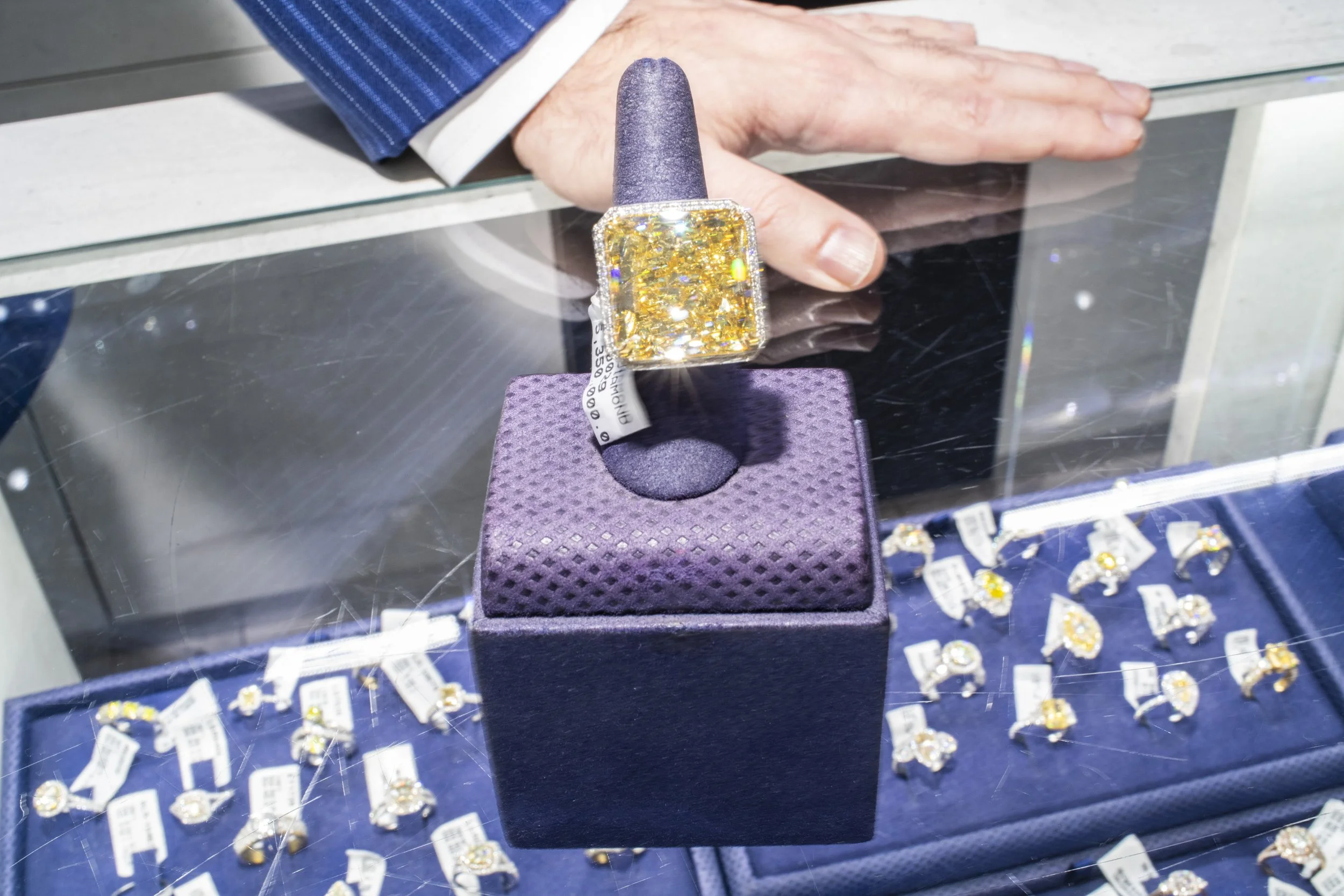
You don’t need to buy this $5M yellow diamond to propose. And you don’t have to spend a fortune on me, either. Let’s keep it to the basics: a few hours of excellent photography from a shooter who can handle anything. The ring is your department. I’ve got the rest.
I'm an NYC proposal photographer, and I've photographed enough surprise proposals to know that keeping the moment secret is only half the job.
A surprise proposal sounds simple until you actually have to pull one off.
You have to get your partner to the right place at the right time, get a photographer into position without them noticing, make sure the light isn't terrible, deal with crowds, weather, transportation, and somehow behave normally while you're carrying an engagement ring in your pocket.
I've photographed a lot of proposals in New York, and the best ones aren't necessarily the most elaborate.
They're the ones where the person proposing has a good plan—and doesn't overcomplicate it.
Here are the things I'd think about before you make the move.
1. Choose the location for the two of you, not Instagram
New York has no shortage of choices for proposal locations.
Central Park. the waterfront. The High Line. Flatiron. The waterfront.
They're all beautiful. They're also often crowded.
The best location is usually somewhere that means something to you—or somewhere that naturally fits into your relationship and lifts you both up.
If your partner would immediately wonder why you're suddenly insisting on a sunrise walk through a particular corner of Central Park, that's not necessarily a great surprise location.
A proposal should feel like something you would actually do together.
That's one reason I often help clients think through the logistics and the cover story before we decide exactly where I'm going to stand.
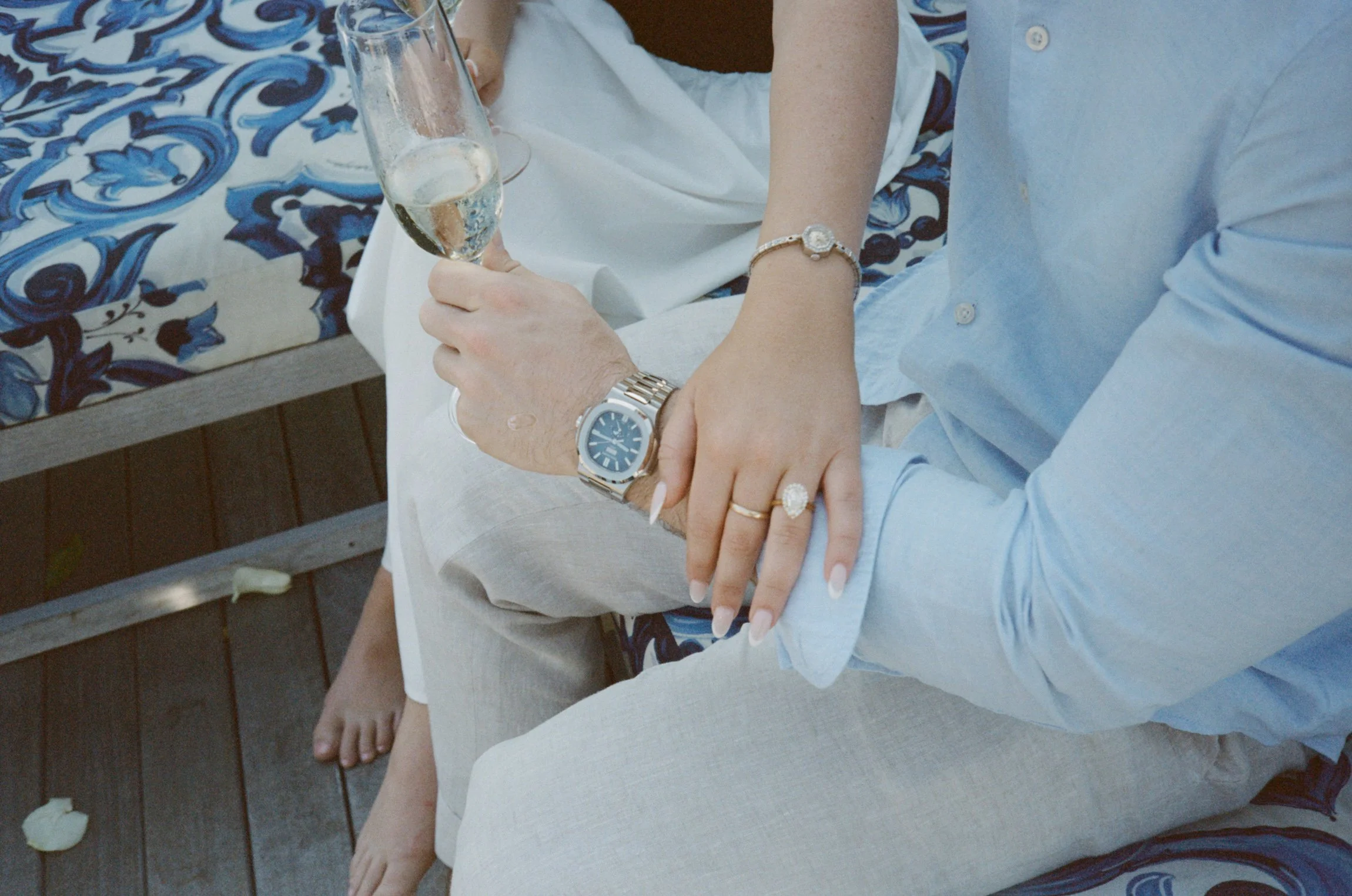
The place to propose was easy for him. He chose Gurney’s, where they’d had their first getaway together. He handled the reservations. I handled the pictures. This one, above, was shot on real film.
2. Don't underestimate the cover story
This is where a lot of proposals go sideways.
Your partner knows you're going to photograph something because you've suddenly arranged a “photo shoot.”
Or you've invented such an elaborate excuse for being somewhere that the excuse itself becomes suspicious.
Usually, simpler is better.
Maybe you're going for drinks.
Maybe you're meeting friends.
Maybe you're taking a walk.
Maybe you're visiting a place you've been meaning to see.
The explanation needs to sound like something you would actually do.
And it needs to get you both close enough to the proposal location without requiring an elaborate production.
3. Give your photographer enough information
I don't need your entire life story.
But I do need to know what's happening.
Where are you coming from?
What time are you arriving?
What will your partner be wearing?
Are you walking, taking a cab, driving, or coming from dinner?
Which direction will you approach from?
What happens if you're early?
What happens if you're late?
The more specific the plan, the less we have to improvise.
And that's important because you don't want your photographer hovering around looking like a photographer.
The goal is for me to be there without becoming part of the scene.
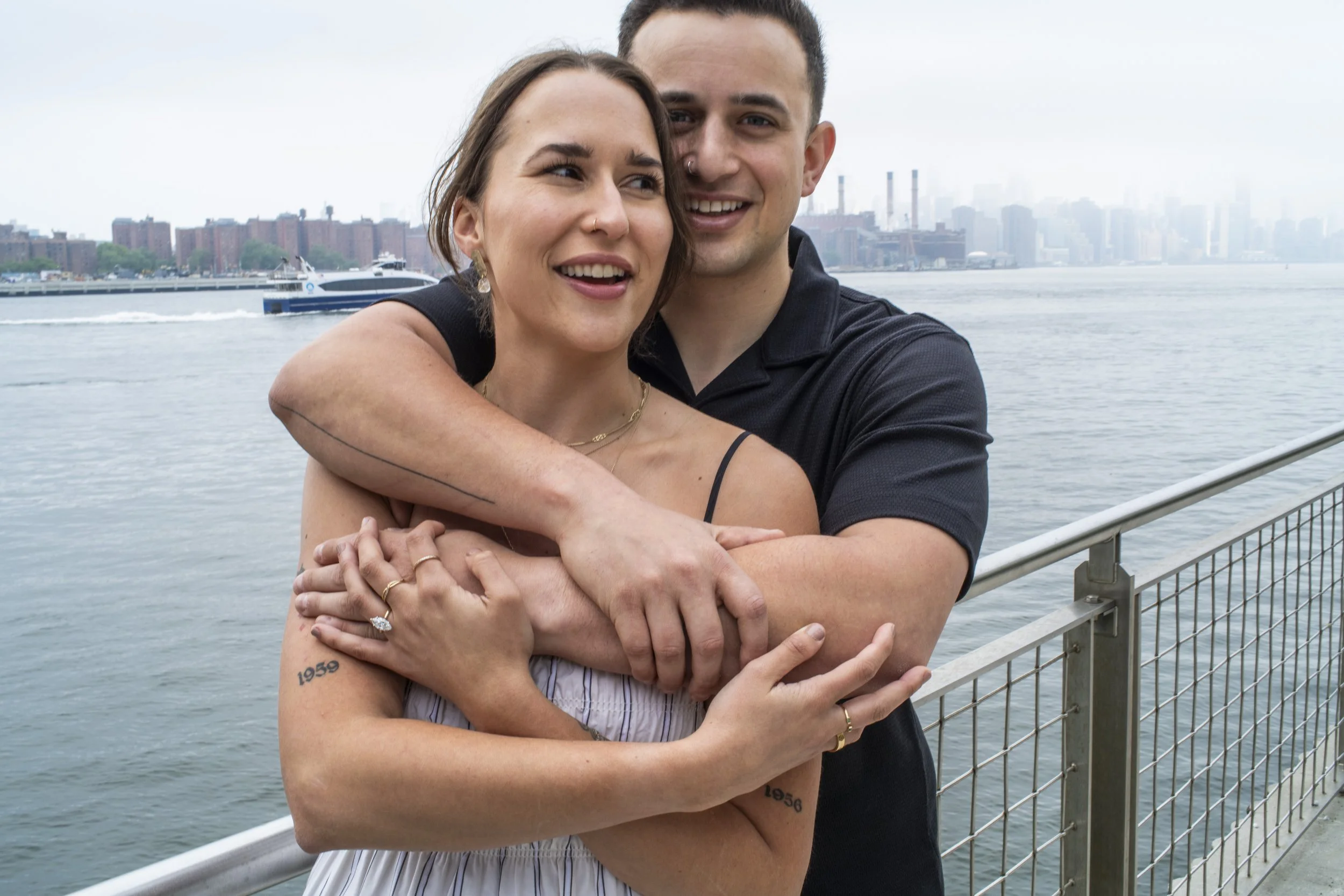
We had a rain plan, but we didn’t need it. Here is their misty morning by the water. You could smell the salt air. Shot on film. You can see her tattoo of the year her parents were born: 1959. Everything has meaning. My job is to capture it.
4. What I handle before you arrive
This is where my job starts well before the proposal itself.
Once I know what you're planning, we can work through the location, timing, light, your route, where I should be positioned, and what happens immediately afterward.
I'll also want to know what your partner looks like and what you'll be wearing, so I can recognize you without having to approach you and ruin the surprise.
If something changes—you're running late, the location is unexpectedly crowded, or the weather shifts—we adjust.
You don't need to be standing there trying to direct the photographer while simultaneously pretending your partner has no idea what's happening.
The goal is for you to have one less thing to think about.
5. Don't make the proposal depend on one exact second
New York doesn't always cooperate.
There might be a wedding party in the spot you wanted.
A tourist might be standing directly where I need to be.
The subway might be delayed.
It might start raining.
Someone might stop you to ask for directions.
This is why I prefer having a plan rather than a single rigid moment.
If we have a little flexibility, I can adjust without you knowing that anything changed.
The proposal still happens.
You still get the moment.
Nobody has to panic.
6. Think about the light
This sounds obvious coming from a photographer, but it's one of the things people don't think about when they're planning a proposal.
A beautiful location at the wrong time of day can be a terrible photographic location.
The direction of the sun matters.
So do shadows, buildings, trees, reflections, and what will be happening around you.
If you're choosing between two locations, I may recommend the less obvious one simply because it gives us better light and more privacy.
That's part of what you're hiring me to figure out.
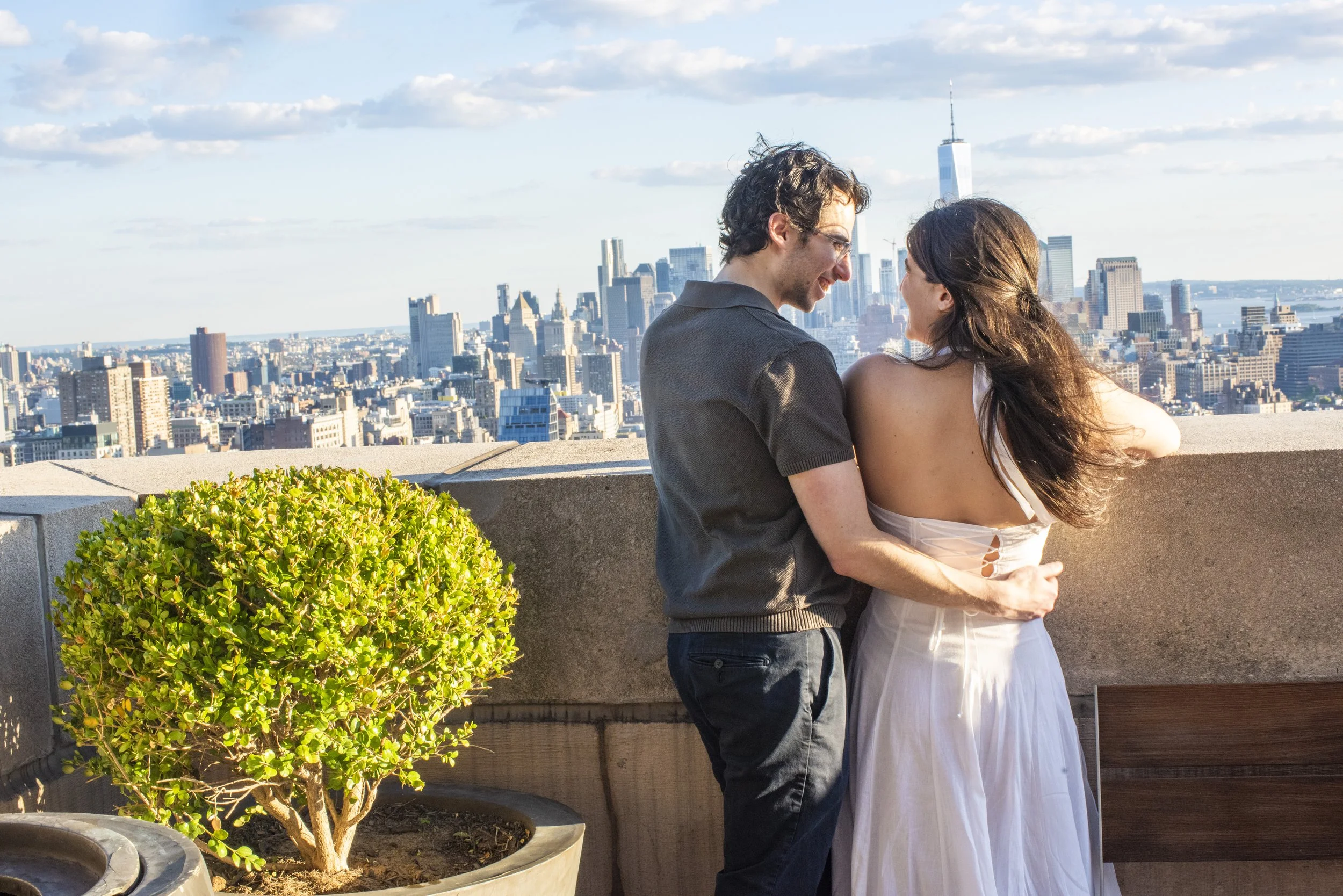
We did it at golden hour, obviously. He chose the spot—their incredible rooftop. I suggested the time. The result is these magnificent moments in a place that will always be their first home.
7. Real proposals are rarely as complicated as they seem
One of my favorite things about photographing proposals is how different they can be.
I've photographed proposals in New York City and beyond where the location had real meaning to the couple, and others where the entire plan was built around creating a believable reason to be somewhere at a particular time.
One example was a proposal at Gurney's in Montauk. The location already meant something to the couple, which made the plan feel natural rather than staged. The photography could stay quiet and documentary while still giving them beautiful photographs of the proposal and what happened afterward.
That's what I'm looking for when I help plan one: a situation that feels like the two of you, rather than a production that happens to contain a proposal.
8. Don't forget what happens immediately afterward
You planned the proposal.
They said yes.
Now what?
This is actually one of my favorite parts to photograph.
The nervousness disappears. You can finally breathe. You hug. You laugh. You look at the ring. You call someone.
This is when we can slow down a little.
If you want portraits afterward, we can make photographs that don't feel like a formal engagement session.
We can walk.
We can get a drink.
We can go somewhere meaningful.
We can let the rest of the evening happen naturally.
You don't need to spend two hours posing.
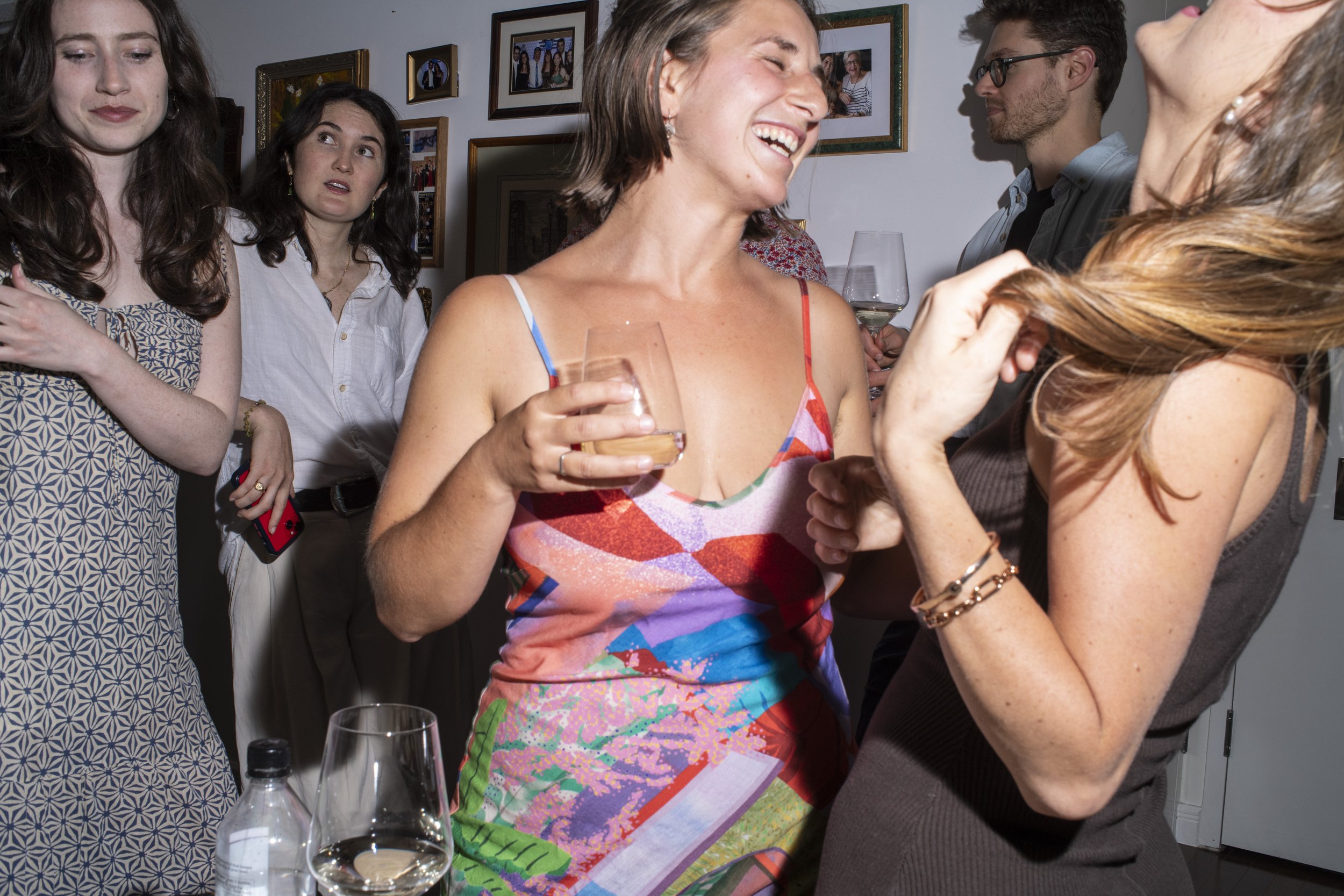
Not only did he call her boss to make sure she could get the next day off, he also surprised her with a party waiting for them downstairs—with all of their best friends. They walked in, and there they all were. She had no idea.
9. Have a backup plan—but don't obsess over it
Weather happens.
Crowds happen.
Locations change.
I would rather have a Plan B that makes sense than spend weeks trying to engineer a proposal that can survive every possible variable.
If the weather turns, we figure it out.
If the original location isn't working, we adjust.
If you're running late, you tell me.
That's the point of having an experienced photographer involved.
You shouldn't have to manage me while you're trying to propose.
The best proposals don't feel produced
The proposals I love most aren't necessarily the ones with the biggest setups.
They're the ones where, looking at the photographs afterward, you can barely believe we were there.
Your partner wasn't performing for the camera.
You weren't posing.
You were just two people having one of the biggest moments of your lives in New York.
That's what I'm interested in photographing.
If you want help figuring out the location, timing, logistics, or the actual mechanics of keeping the proposal a surprise, that's part of what I do.
You don't need to arrive with everything figured out.
You just need to know that you want to do it.
See NYC Proposal Photography →
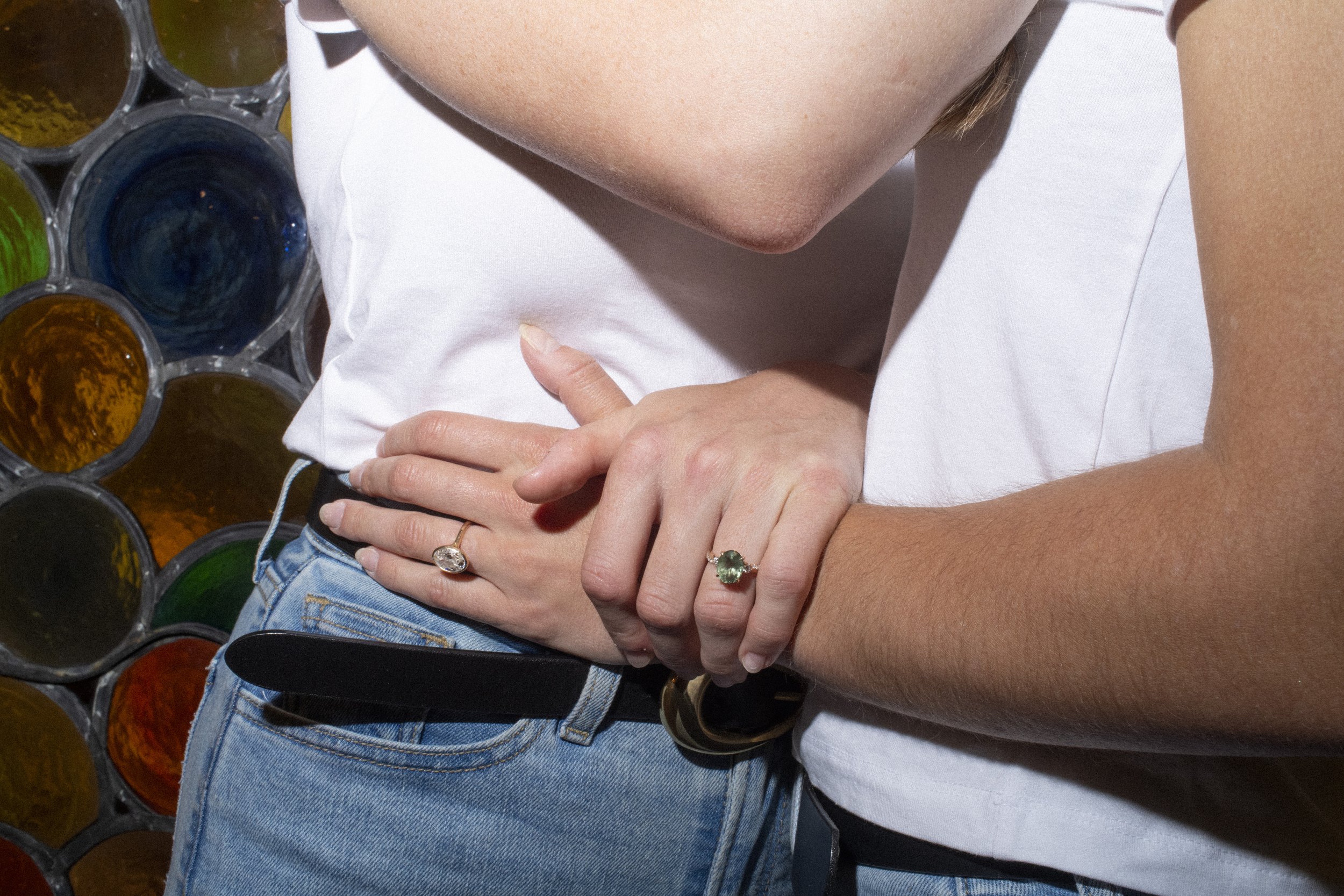
Remember, at the end of the day, it’s about the two of you. My job is to make sure you remember all the moments that the thrill and excitement can make you forget in that adrenaline-fueled blur of joy. She proposed with two rings—one for each of them. A white, colorless diamond for one, a green sapphire for the other. Each ring chosen by her for the other.